
 EN
EN
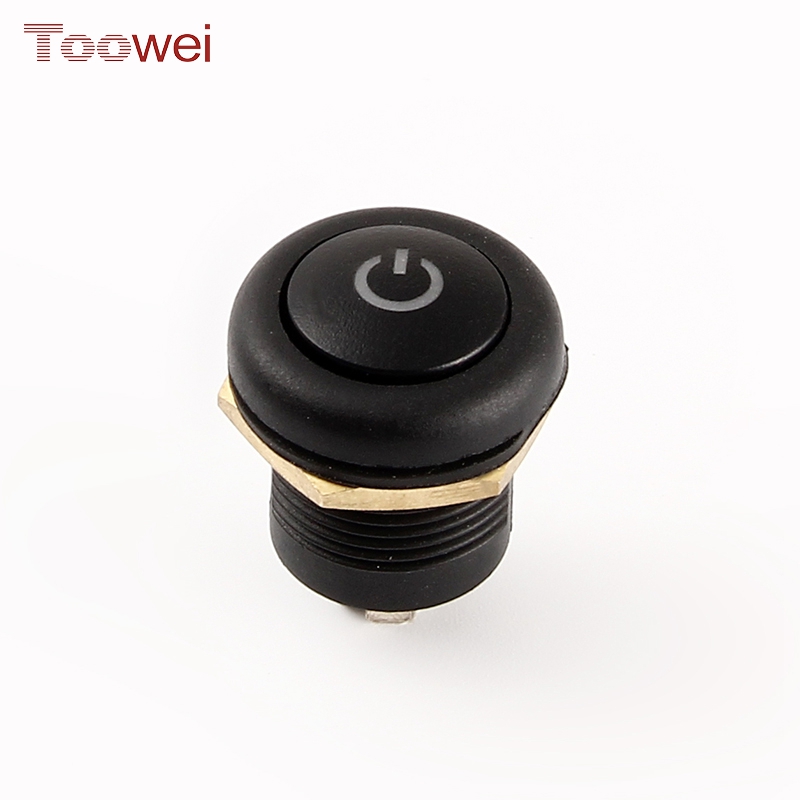
The momentary push button stands as one of the most fundamental yet highly effective control components in modern equipment design. Engineers and designers across industries rely on momentary push button switches to deliver precise, responsive control in applications ranging from manufacturing machinery to medical devices and consumer electronics. Understanding the distinct advantages that a momentary push button offers is essential for anyone involved in product development, system integration, or equipment specification.
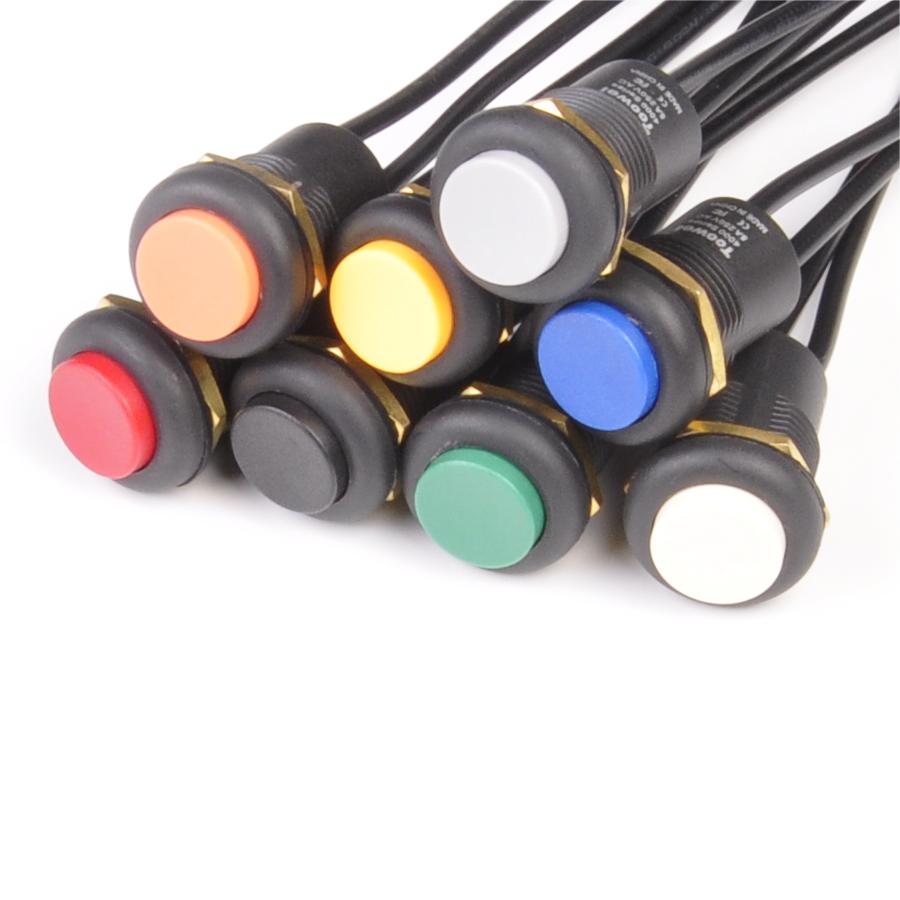
A momentary push button operates on the principle of temporary connection: when pressed, it activates a circuit or command, and when released, it immediately returns to its resting state. This simple yet powerful mechanism makes the momentary push button an indispensable element in control system architecture, enabling operators to execute single actions with confidence and precision. The widespread adoption of momentary push button technology reflects its proven reliability, intuitive user experience, and cost-effective integration into diverse equipment types.
Safety and Operational Control Benefits
Fail-Safe Design Characteristics
One of the most significant advantages of a momentary push button is its inherent fail-safe design. Unlike latching buttons that remain in an activated state, a momentary push button automatically returns to its neutral position the instant the operator releases pressure. This design ensures that if an operator loses grip or becomes incapacitated, the equipment immediately ceases the commanded action rather than continuing indefinitely. This safety feature is particularly critical in high-risk environments such as industrial manufacturing, construction equipment, and emergency stop scenarios where unintended prolonged activation could cause severe injury or equipment damage.
Intentional Action Confirmation
The momentary push button requires continuous operator engagement, which serves as a natural safeguard against accidental activation. Because the operator must hold the button throughout the desired action, a momentary push button provides cognitive confirmation that the command is deliberate and sustained. This tactile feedback loop reduces operator error and prevents unintended machine movements or process initiations. Equipment using a momentary push button configuration demands active participation rather than passive oversight, significantly enhancing workplace safety protocols.
Precision Control and Responsiveness
Real-Time Command Execution
The instantaneous response of a momentary push button enables fine-grained control over equipment behavior. When precision is paramount—such as in assembly operations, positioning systems, or laboratory instrumentation—a momentary push button allows operators to execute commands with millisecond accuracy. The immediate disconnect when released means operators can make micro-adjustments and corrections in real-time, providing the level of control necessary for high-tolerance manufacturing and critical processes. This responsiveness makes a momentary push button the preferred choice for applications requiring operator skill and situational awareness.
Integration with Automated Systems
Modern equipment often combines manual control with automated workflows, and a momentary push button integrates seamlessly into these hybrid systems. Programmable logic controllers and microprocessor-based systems can interpret momentary push button inputs to trigger complex sequences, conditional logic, or emergency protocols. The clean electrical profile of a momentary push button—simple make-and-break contact—works reliably with both analog and digital control architectures, making it a versatile interface between human operators and machine intelligence.
Reliability, Cost Efficiency, and Design Flexibility
Long Service Life and Durability
A momentary push button is engineered for millions of actuation cycles without degradation in performance. The straightforward mechanical design means fewer moving parts and minimal internal complexity, which directly translates to extended service life and reduced maintenance requirements. Industrial environments subject equipment to vibration, temperature extremes, and contamination, yet a well-designed momentary push button maintains consistent electrical contact and mechanical function across these challenging conditions. The durability of a momentary push button reduces downtime and lowers total cost of ownership over the equipment's lifecycle.
Scalable Implementation and Cost Advantages
Equipment designers benefit from the cost-effectiveness of momentary push button technology. A momentary push button requires no complex electronics, no locking mechanisms, and minimal supporting circuitry compared to alternative control methods. This economic advantage becomes pronounced in high-volume manufacturing where per-unit component costs significantly impact overall product competitiveness. Additionally, the universal familiarity of momentary push button interfaces means reduced operator training needs, faster onboarding, and lower deployment friction across organizations with diverse technical skill levels.
Customization and Aesthetic Flexibility
A momentary push button can be tailored to meet specific equipment requirements through color coding, custom travel distances, actuation force specifications, and contact material options. Whether equipment demands a heavy-duty industrial variant rated for harsh factory environments or a compact medical-grade version for sterile applications, the momentary push button platform accommodates these needs without fundamental redesign. This design flexibility allows manufacturers to create equipment that aligns with brand identity, user expectations, and regulatory compliance standards while maintaining the proven functionality of momentary push button architecture.
FAQ
How does a momentary push button differ from a latching push button?
A momentary push button returns to its resting state immediately when released, whereas a latching push button remains in its activated state until pressed again. The momentary push button requires continuous operator engagement, making it ideal for safety-critical applications and manual control scenarios. Latching buttons are better suited for applications where you want to maintain a state without continuous input, such as power toggles or mode selection.
What industries benefit most from momentary push button technology?
Manufacturing, construction, medical devices, laboratory equipment, and emergency systems all rely heavily on momentary push button designs. Any industry where operator safety, precision control, and fail-safe operation are critical will find the momentary push button to be an essential component. The technology is equally valuable in consumer equipment requiring intuitive, responsive user control.
Can a momentary push button integrate with modern digital control systems?
Yes, momentary push button switches integrate smoothly with programmable logic controllers, microprocessors, and IoT systems. The simple electrical signal generated by a momentary push button is easily detected and interpreted by modern control hardware, allowing complex automation logic to respond to operator input in real-time.