
 EN
EN
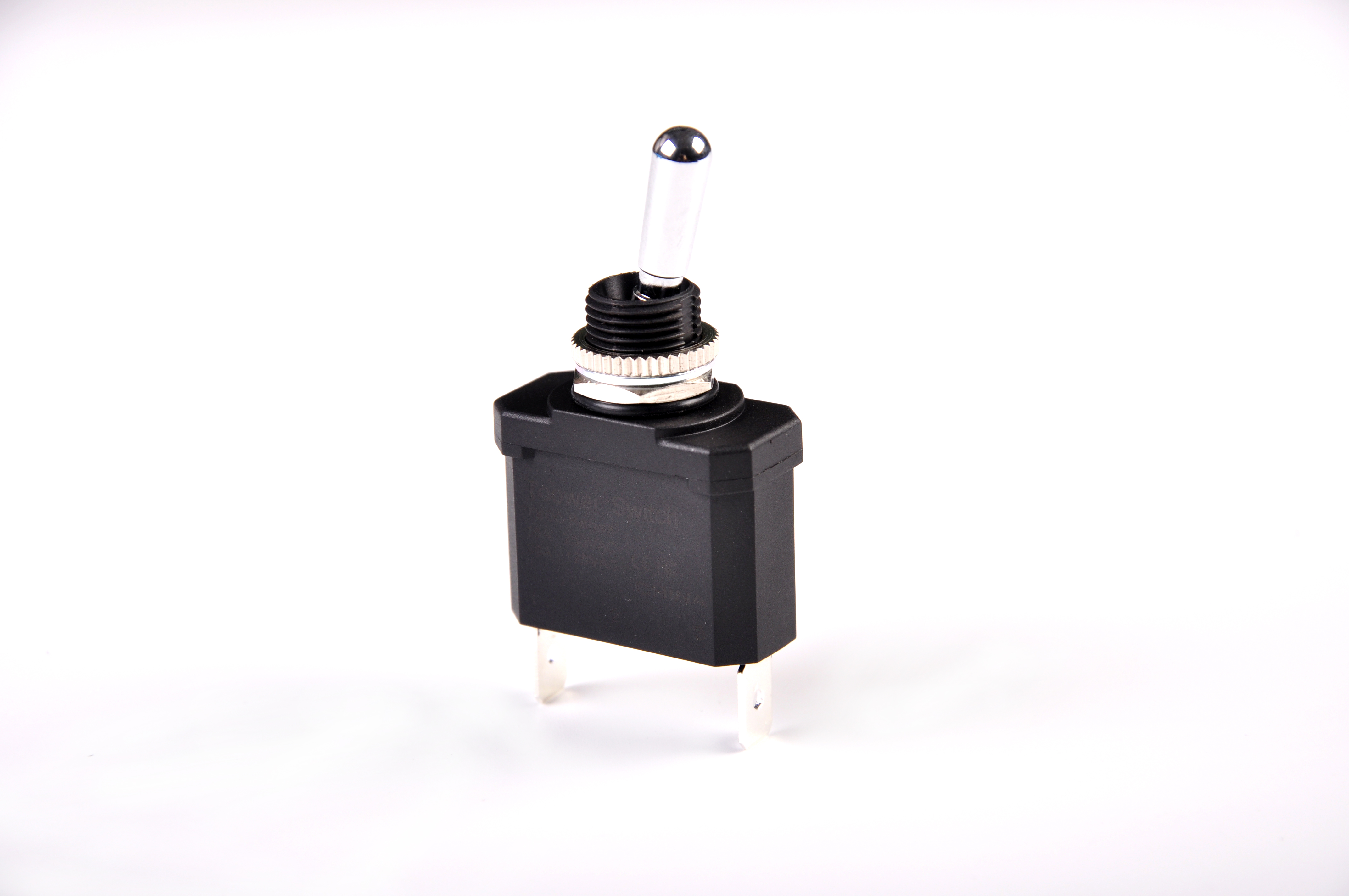
An on off toggle switch is one of the most fundamental electrical components in industrial and consumer applications, yet many operators and engineers underestimate the critical importance of switching stability in their performance. Switching stability refers to the consistent, predictable behavior of an on off toggle switch during activation and deactivation cycles, ensuring that electrical circuits maintain reliable connection without unwanted interruptions, bouncing, or signal degradation. Understanding why switching stability matters can mean the difference between equipment that functions reliably for years and systems prone to failures, safety hazards, and costly downtime.
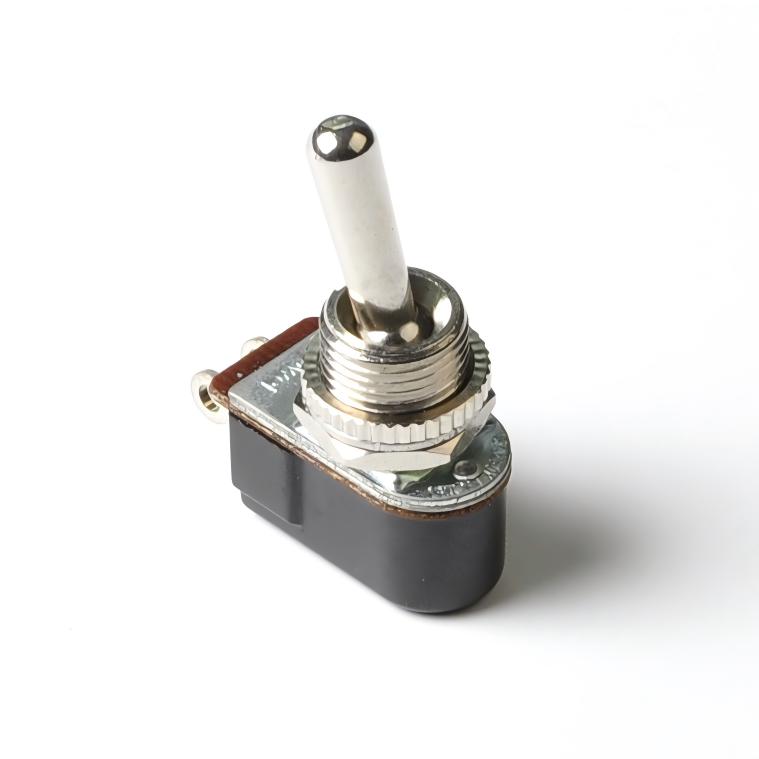
In industrial environments, manufacturing facilities, control panels, and safety-critical systems, the reliability of an on off toggle switch directly impacts operational efficiency, worker safety, and equipment longevity. When switching stability is compromised, an on off toggle switch can exhibit contact bounce, intermittent disconnections, or erratic behavior that cascades into larger system failures. This comprehensive guide explores the technical and practical reasons why switching stability is essential for any on off toggle switch application, how instability manifests in real-world scenarios, and what design and maintenance strategies help ensure peak performance.
The Role of Switching Stability in Electrical Circuit Integrity
How Contact Bounce Affects On Off Toggle Switch Performance
Contact bounce is the primary manifestation of poor switching stability in an on off toggle switch. When mechanical contacts close or open, they do not engage in a single, clean instant; instead, they make and break contact microseconds multiple times before settling into a stable state. For a basic on off toggle switch controlling a motor or light, contact bounce may cause brief flickering or momentary power disruptions. However, in sensitive digital circuits, data acquisition systems, or safety interlocks, contact bounce from an on off toggle switch can be interpreted as multiple switching commands, corrupting data streams or triggering unintended actions.
The physical root cause of contact bounce in an on off toggle switch lies in the momentum and elasticity of the mechanical toggle arm and the spring-loaded contacts beneath it. When you actuate an on off toggle switch, the toggle moves quickly, but the contacts do not reach their final position instantly. Instead, they oscillate around their landing position for several milliseconds, creating a series of transient make-and-break events. In high-speed or frequency-sensitive applications, this unpredictability in an on off toggle switch translates directly into signal noise, which degrades circuit performance and can compromise the integrity of critical control signals.
Contact Resistance and Switching Stability
Another critical dimension of switching stability in an on off toggle switch is contact resistance. Even when an on off toggle switch is in the fully closed position, the resistance across the contacts is not zero; it depends on the contact material, surface cleanliness, contact pressure, and electrical load. Poor switching stability manifests when contact resistance fluctuates during or after switch actuation. If an on off toggle switch has unstable contact resistance, the voltage drop across the switch becomes unpredictable, potentially introducing noise into analog circuits or causing voltage regulation problems in power distribution applications.
Switching stability in an on off toggle switch is enhanced when the contacts are made of materials with excellent electrical conductivity, such as silver alloy or gold plating, and when the mechanical design applies consistent pressure to maintain a secure connection. Corrosion, oxidation, or contamination on the contact surfaces degrades switching stability by increasing contact resistance over time. This is why industrial-grade on off toggle switches designed for harsh environments include sealed contacts or plating that resists oxidation, ensuring that switching stability remains high throughout the product lifecycle.
Practical Implications of Switching Stability in Industrial Applications
Safety and Reliability in Control Systems
In safety-critical applications such as emergency stop circuits, interlocks, or machinery control systems, switching stability is not merely a performance metric; it is a requirement for worker safety. An on off toggle switch with poor switching stability might fail to interrupt power decisively when an emergency stop is activated, or it might intermittently re-engage a motor due to contact bounce, creating a serious hazard. Regulatory standards such as IEC 61508 and ISO 13849 place stringent demands on the reliability and stability of switching components in safety functions, which is why professional-grade on off toggle switches undergo rigorous testing to verify that switching stability meets or exceeds safety thresholds.
Switching stability in an on off toggle switch is directly correlated with mean time between failure (MTBF) statistics. Switches with superior switching stability exhibit dramatically longer operating lives because the stable, predictable switching action minimizes mechanical wear on the contacts and the toggle mechanism. Conversely, poor switching stability accelerates contact erosion, spring fatigue, and intermittent contact failures, reducing the effective service life of an on off toggle switch and increasing maintenance frequency in industrial facilities.
Signal Integrity in Digital and Analog Circuits
Digital control systems, programmable logic controllers (PLCs), and data acquisition equipment rely on clean, stable electrical signals. When an on off toggle switch with poor switching stability is used in these contexts, contact bounce introduces false transitions that microcontrollers or sensors may misinterpret as valid commands. A single actuation of an on off toggle switch experiencing severe contact bounce might generate dozens of electrical pulses, each one potentially triggering a separate action in the control software. Engineers often address this problem through debouncing circuitry, but the most effective solution is to select an on off toggle switch with inherent switching stability that minimizes bounce in the first place.
In analog applications such as audio switching, instrumentation, or precision power switching, the switching stability of an on off toggle switch directly impacts signal-to-noise ratio and measurement accuracy. An on off toggle switch with unstable contact behavior injects high-frequency noise into sensitive analog circuits, degrading signal fidelity. This is particularly critical in industrial measurement and testing equipment, where an on off toggle switch is often part of the signal conditioning chain. Selecting an on off toggle switch engineered for low contact bounce and stable resistance characteristics ensures that the switch does not become a source of unwanted noise in the measurement pathway.
Design and Specification Factors That Ensure Switching Stability
Mechanical Design and Material Selection
Switching stability in an on off toggle switch begins with mechanical design. Switches engineered with precision-machined toggle arms, high-quality spring mechanisms, and optimal contact geometry naturally exhibit superior switching stability. The spring constant and the damping characteristics of the toggle mechanism determine how quickly an on off toggle switch settles to its final state. If the spring is too weak, the contacts may oscillate excessively before stabilizing, prolonging the bounce period. If the spring is too stiff, it can cause mechanical shocks that damage the contacts or lead to premature wear, ironically reducing switching stability over the product lifetime.
Contact material is equally important to switching stability in an on off toggle switch. Silver alloy contacts provide excellent electrical conductivity and natural resistance to oxidation, supporting long-term switching stability even in challenging environments. Gold-plated contacts offer superior corrosion resistance, ensuring that an on off toggle switch maintains low contact resistance over many cycles. The thickness of the plating, the substrate material, and the contact force all influence how well an on off toggle switch preserves switching stability as it ages. Premium industrial on off toggle switches are designed to maintain switching stability across millions of actuation cycles under specified load conditions.
Testing and Performance Certification
Manufacturers of high-reliability on off toggle switches validate switching stability through comprehensive testing protocols. Bench testing measures contact bounce duration, contact resistance variation, and electrical performance under representative load conditions. Life cycle testing subjects an on off toggle switch to accelerated operation—often hundreds of thousands to millions of cycles—to verify that switching stability does not degrade with age. Thermal cycling tests confirm that an on off toggle switch maintains switching stability across the full operating temperature range, because temperature fluctuations can affect spring tension and contact pressure, which directly influence switching stability.
Industry standards such as IEC 60947-5-5 and MIL-DTL-6661 define test methods and performance acceptance criteria for on off toggle switches, including specific benchmarks for contact bounce duration, contact resistance limits, and switching stability over the product lifetime. When selecting an on off toggle switch for critical applications, verifying that it has been tested and certified against these standards provides assurance that switching stability meets recognized engineering requirements. Certification data for an on off toggle switch often includes bounce duration in milliseconds, maximum contact resistance in ohms, and the number of switching cycles over which stability is guaranteed.
FAQ
What is the typical contact bounce duration in a quality on off toggle switch?
A well-designed on off toggle switch typically exhibits contact bounce lasting 5 to 15 milliseconds, depending on the mechanical design, spring characteristics, and contact geometry. However, this duration can be significantly longer in cheaper or older on off toggle switch designs. Industrial-grade on off toggle switches engineered for minimum bounce may achieve bounce durations below 5 milliseconds, and the variability from cycle to cycle is minimized. In digital applications where signal integrity is critical, even 5 milliseconds of bounce can be problematic unless debouncing logic is implemented in the control circuit. When specifying an on off toggle switch for noise-sensitive applications, always request the maximum bounce duration specification from the manufacturer.
How does switching stability in an on off toggle switch affect maintenance costs?
Poor switching stability in an on off toggle switch accelerates contact wear, increases the frequency of switch failures, and multiplies troubleshooting time when intermittent problems occur. Equipment outages due to a failing on off toggle switch can cost thousands of dollars per hour in production losses, making the upfront investment in a high-stability switch a highly cost-effective decision. Maintenance teams often spend disproportionate effort diagnosing intermittent faults caused by an on off toggle switch with marginal switching stability, only to discover that replacing it with a higher-quality switch eliminates the problem entirely. Over a multi-year deployment, the cumulative maintenance savings from choosing a stable, reliable on off toggle switch typically far exceed the modest price difference between standard and premium grades.
Can switching stability in an on off toggle switch be improved after purchase?
Switching stability is fundamentally a characteristic of the on off toggle switch design and manufacture, and it cannot be significantly enhanced after the switch is produced. However, proper installation, environmental protection, and regular maintenance can help preserve the switching stability that the on off toggle switch possessed when new. Ensuring that an on off toggle switch is protected from moisture, dust, and temperature extremes limits degradation of contact surfaces. Using appropriate debouncing circuitry in the control system can compensate for an on off toggle switch with marginal switching stability, but this is a workaround rather than a true solution. The most effective strategy is to select an on off toggle switch with proven switching stability characteristics before it enters service, rather than attempting to fix instability through design workarounds downstream.